
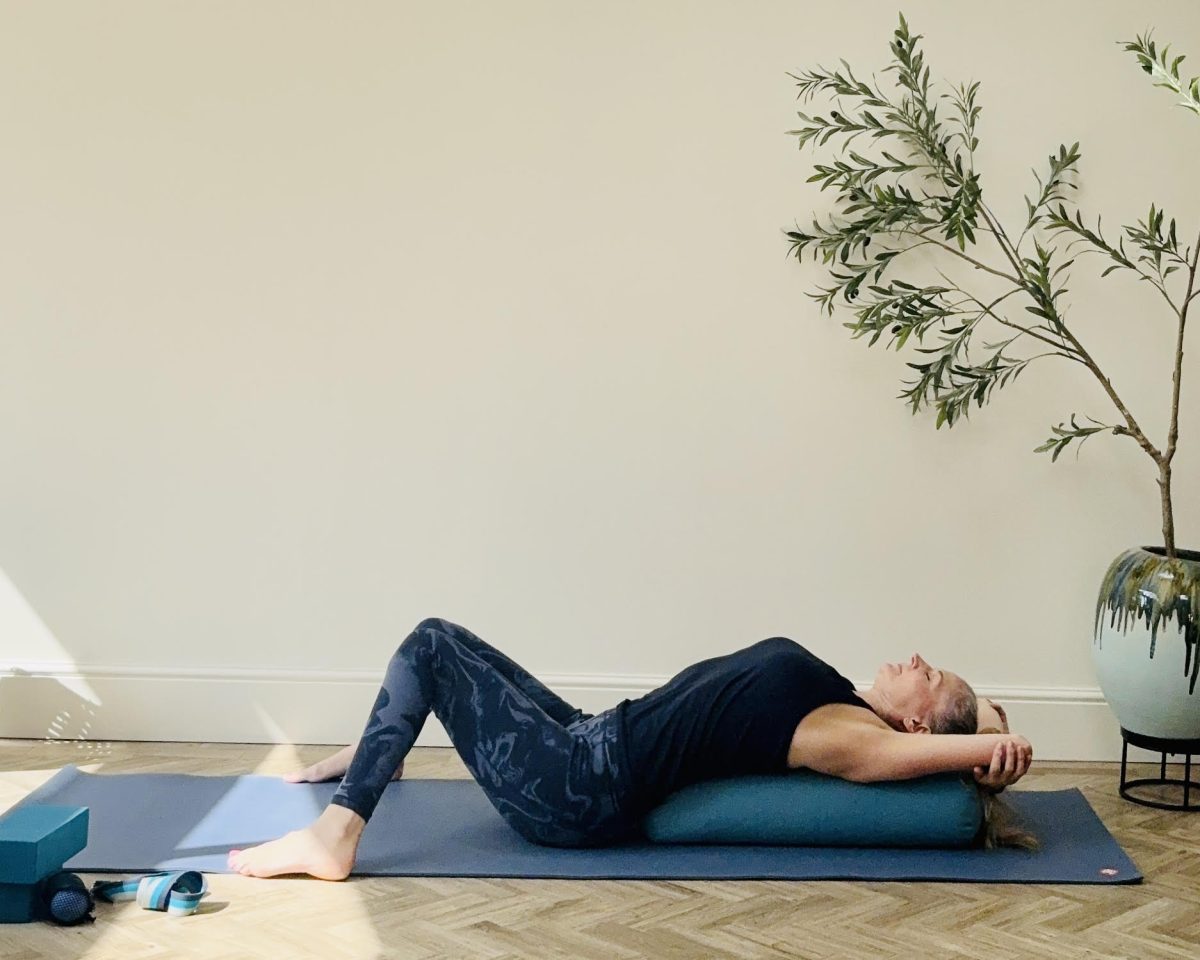
We are in the middle of a heatwave here in the UK, and you may be finding it hard to cool down. The nights are warm, the rooms stay stuffy, and by the time you come to your mat everything feels a bit different to usual. Sticky before you have even started. Heavy. The idea of lying on the floor for an hour sounds either completely perfect or completely wrong, depending on the day.
So should you do Yin Yoga when it is hot?
Yes. But gently, and with a bit more awareness than usual.
What the Heat Is Actually Doing
In Yin, we are not working the muscles in the same way as a flow class. We are holding for longer, letting the muscles settle and soften, and waiting for the deeper layers of the body to respond, including the fascia, ligaments and tissue around the joints. It is slow, quiet work.
Heat makes that tissue more pliable. Things release more readily. You may feel more open and more spacious in the pose. That can feel really good.
It can also be a bit misleading.
When the body is warm, it is easier to go further into a shape than you normally would, and harder to notice that you have done too much until later. The usual signals can feel quieter. You feel fine at the time, and then the next morning you know.
So in hot weather, going a little less far than you could is not a limitation. It is just good sense.
A useful check: can you breathe here? Can you soften? Could you stay for another minute without bracing or waiting for it to end?
If not, come up a little.
Why Yin Can Work Really Well in Summer
There is something quite natural about slowing down when it is hot. The body is already asking for less. Less effort, less rushing, less doing. Yin meets that well.
A gentle Yin practice in warm weather can feel genuinely settling. You are close to the ground, you are not generating more heat, and you are giving the body time and space rather than asking it to work.
For a lot of people, it feels like relief. A chance to stop. A chance to breathe.
The warmth is doing some of the softening for you. Which means you do not need to add effort on top of it.
How to Adapt
If I am teaching on a warm day, I keep things quieter than usual. Fewer poses, a bit less time in each one, more support, more space between sides.
I choose shapes that feel genuinely restful rather than anything too intense. Supported child’s pose, half butterfly, reclined butterfly, a gentle twist. Nothing that is going to ask too much of a body that is already working hard to stay cool.
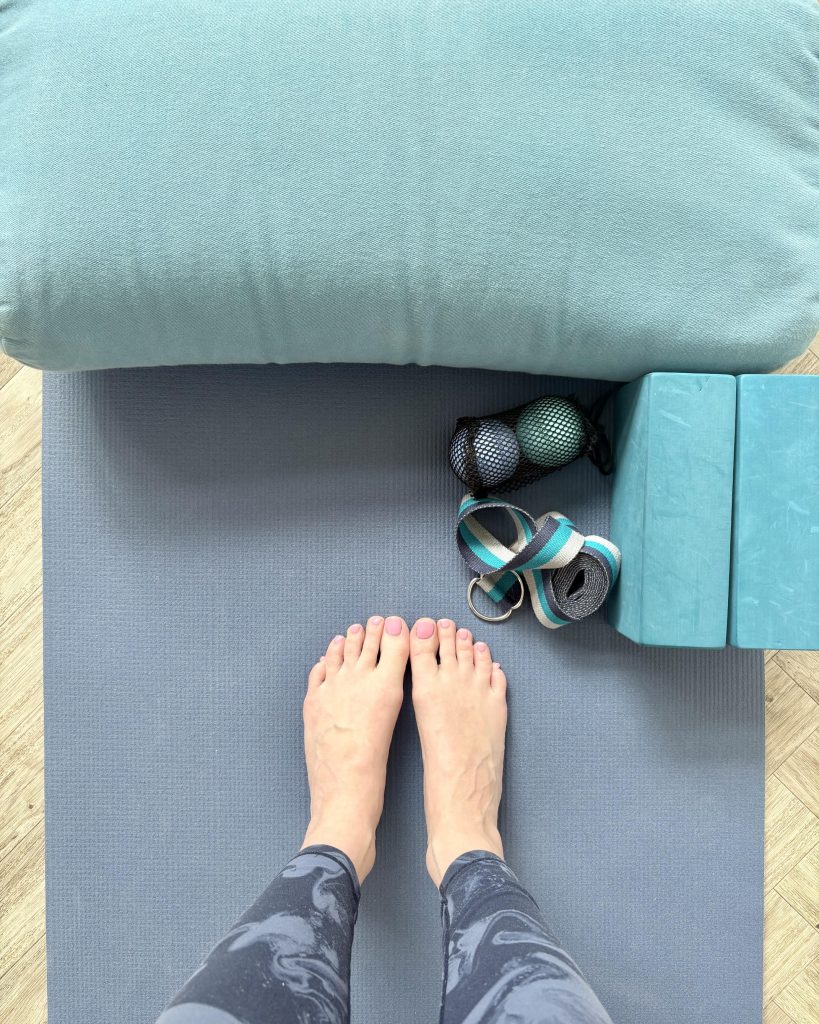
Props help more than usual. A bolster, blocks, a folded blanket under the hips. They let you settle into the pose without sinking too deep or hanging off your joints.
Using more support does not make the practice weaker. It makes it appropriate for the conditions.
Drink water before you come. And if you are practising at home, get some air moving through the room.
When to Skip It
Some days Yin is not the right call.
If you feel dizzy, headachy, unusually tired, or have been out in strong sun for a while, the most useful thing is probably to cool down, drink something and rest.
That is listening to your body, which is exactly what Yin is trying to teach you.
If you are pregnant, unwell, or managing a health condition that affects how you respond to heat, keep things gentle and take medical advice if you need to.
Go gently. Use more support. Come out slowly. Let the practice meet the day you are actually in.
Related Pages