
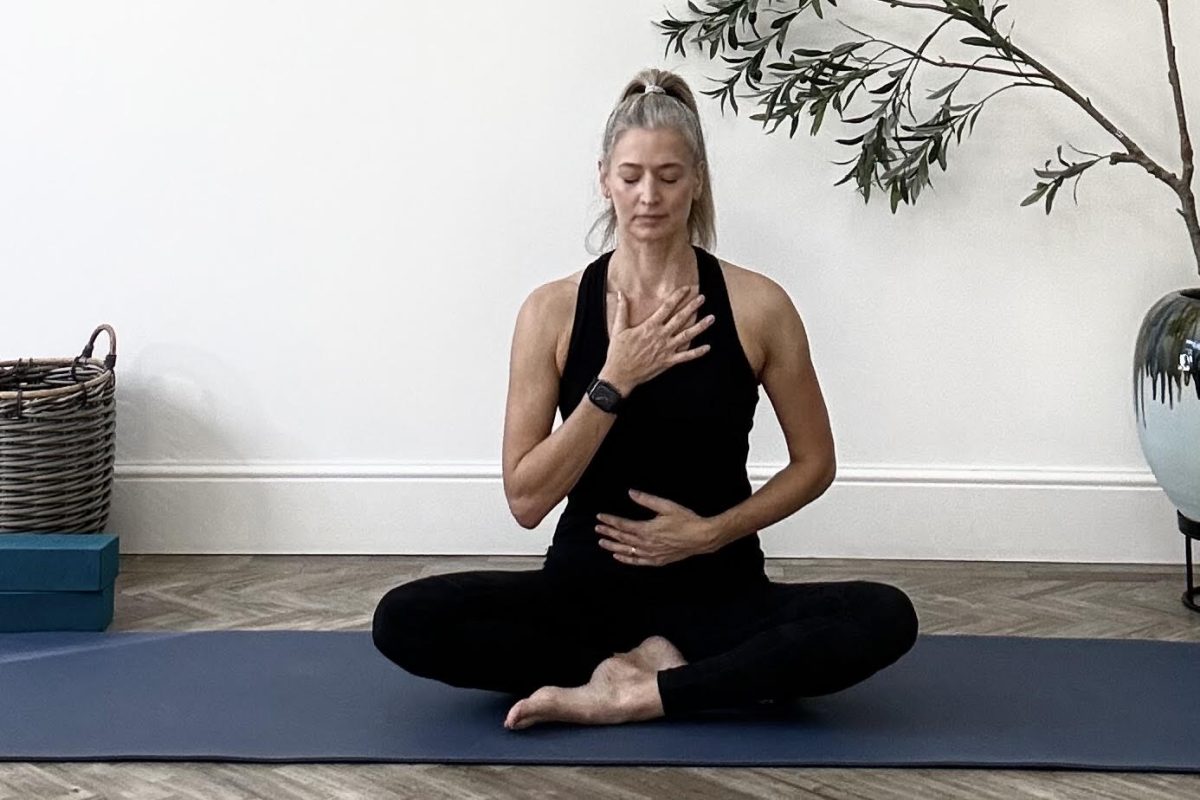
When was the last time you went for a walk without headphones, drank a cup of tea without looking at your phone, or sat somewhere without feeling the need to occupy yourself?
I’m certainly not immune to the distractions of modern life. It’s all too easy to find myself doing several things at once, and even when I have a little time to spare, there’s a temptation to fill it with something.
I’ve been experimenting with a little more silence in my yoga classes recently, both in meditation and during Savasana. As someone who spends quite a lot of time carefully choosing music to accompany our practices, I’ve found it interesting to explore what happens when I take it away.
For some of us, silence feels wonderfully restful. For others, it can feel unfamiliar or even a little uncomfortable. Without something external to focus on, we may become more aware of our thoughts, our habits and our tendency to look for distractions.
It has got me reflecting on Pratyahara, one of the lesser-known aspects of yoga.
What is Pratyahara?
Pratyahara is the fifth of the eight limbs of yoga described in Patanjali’s Yoga Sutras. The Sanskrit word is commonly translated as ‘withdrawal of the senses’.
Within the eight limbs, Pratyahara sits between Pranayama (breath regulation) and Dharana (concentration), marking a transition from the more outward aspects of yoga towards the inner practices.
Our senses continually draw our attention towards the world around us. What we see, hear, smell, taste and touch all influence our experience.
Pratyahara invites us to explore our relationship with this sensory information and develop a greater degree of choice over where we place our attention.
It isn’t necessarily about shutting out the world, but becoming less pulled in different directions by it.
Living in a world of constant stimulation
Although Pratyahara is an ancient yoga practice, it feels particularly relevant to modern life.
November is a good example. Black Friday offers fill our inboxes, Christmas advertising is everywhere, notifications demand our attention and there seems to be an ever-growing list of things to buy, organise and do.
Technology has also made it incredibly easy to fill almost every moment of our day. We listen to podcasts whilst walking, watch television whilst scrolling through our phones and check our emails whilst waiting for the kettle to boil.
I recognise some of these habits in myself. What starts as a quick look at my phone can easily turn into several minutes of reading things I hadn’t intended to read in the first place!
And whilst I enjoy having access to so much information, inspiration and interesting content, I sometimes wonder how much of it I consciously choose to take in.
Have we become so accustomed to constant stimulation that its absence feels a little unfamiliar?
Exploring Pratyahara through yoga
Savasana offers us a lovely opportunity to explore Pratyahara.
At the end of our physical practice, there are no more postures to move into, no balance to maintain and nothing to physically achieve.
Yet being still isn’t always as straightforward as it sounds.
We may hear sounds outside the room, notice sensations within the body or find ourselves mentally working through tomorrow’s to-do list.
Sometimes, removing external distractions makes our internal chatter seem even louder.
I’ve been practising yoga for around 25 years, and that certainly doesn’t mean I always find it easy to switch off. Some days are easier than others, and I think that’s part of what makes yoga such an interesting lifelong practice.
The invitation is not to fight these experiences, but to explore whether we can allow them to be present without being drawn into each one.
There is no need to judge the experience or decide whether we are particularly good at being still.
Bringing Pratyahara into everyday life
We don’t need to withdraw completely from the world or spend hours in meditation to begin exploring some of the principles of Pratyahara.
Here are a few simple things you might like to experiment with:
Leave a few moments unfilled. Next time you’re waiting for the kettle to boil or standing in a queue, notice the instinct to reach for your phone. See what happens if you don’t.
Give your senses a little less to process. Try going for a walk without headphones, eating a meal without a screen or spending part of your evening without the television playing in the background.
Be more selective with your attention. Consider which notifications, emails and social media accounts genuinely add something to your life. Just because something demands your attention doesn’t mean you have to give it.
Practise resting without distraction. Set aside five or ten minutes to lie comfortably in Savasana without music or a guided relaxation. Notice how it feels to simply be there.
These aren’t more things to add to your to-do list. They’re invitations to become a little more curious about your habits and where your attention goes.
Not every moment needs to be filled
One of the things I love most about yoga is how its teachings continue to find their way into everyday life.
Pratyahara reminds us that yoga is not only about what we do, but also about what we choose not to do.
We cannot always control the amount of noise in the world around us, but we can become more conscious of how much of it we invite in and how readily we give it our attention.
Perhaps, particularly at this time of year, there is something to be gained not from adding more to our lives, but from occasionally taking something away.
Not every moment needs to be filled.
Explore the quieter side of yoga
If you’d like to explore some of the quieter aspects of yoga with me, my weekly Wind Down and Deep Stretch Yin classes, monthly Deep Release sessions and day retreats all offer opportunities to slow down and turn your attention inwards.